Counsel tempered by years of experience is not opinion; it is evidence earned, proven and worth your following
When a person is “retired,” there is a lot more time to scroll LinkedIn. Noticeably, posts from former senior colleagues are nearly non-existent. Periodically, you’ll see a reply in the category of “not quite so” to a well-intentioned piece of youngish or mid-career advice. But as a rule, guidance from seasoned professionals — those with both time and perspective — is rare.
I’ve noticed that in news reports, networks regularly invite commentators from my generation to weigh in on international affairs, recently Iran, and Middle East tensions, as examples. Yet on LinkedIn, there is little appetite for seasoned, graying professionals to offer their perspective on work-related issues. That seems odd. Many of us have no fewer than sixty years of work experience — from the most junior roles to the most senior. Why is there so little interest in tapping that repository of knowledge?
I have decided to offer it anyway — without invitation — in the hope that someone might find it useful, informative, or even reassuring.
Today’s topic: The Pivot.
Yes, believe it or not, there is a generation of senior professionals who have pivoted — often more than once. Those pivots were sometimes driven by personal circumstances, family constraints, or employer decisions.
The most important advice: recognize that the person you wanted to become may not be confined by your present circumstances — even if you once believed that where you were was where you were meant to remain.
As George Eliot wrote, “It is never too late to be what you might have been.”
Pivoting is hard. But it is often necessary. Focus on your own journey and how you want it to look when viewed through the rear-view mirror years from now. There may be political forces at play. There may be injustice. But progress is anchored in resolve, not blame. How you arrived here matters less than how you move forward.
A “new” start may require learning new skills. It may place you in a setting where your expertise feels diminished. View that not as regression, but as expansion — diversification of skills, strengthening of adaptability, adding depth to your CV,–all growth indicators.
If you were once excellent at what you did, that excellence has not vanished. It is part of who you are. A temporary setback in title, role, compensation, or responsibility is just that — temporary. The real disappointment often lies in the gap between where you are and where you expected yourself to be. That is a timing issue — not a verdict on your capability.
So have confidence. Get back on the horse. The person who succeeded before has not disappeared. That person will emerge again as you acclimate to a new landscape.
This is not Pollyanna optimism. It is not a recycled 1950s storyline. It is the perspective of more than sixty years spanning roles from the most modest to the most elevated. It is real and it is advice worth adopting. Yes, it is hard, but not impossibly hard. The most rewarding paths are seldom easy.
As Einstein observed, “The only source of knowledge is experience.” This too shall pass. Make this your new pivot mantra: Assess. Reset. Move. Don’t take it on faith–take it on evidence. Experience shows this works.





 gets the wisest and most sage among us, leaving only the young –Darwinian masterminding creating a world that sans seniors, becomes a feeding ground for other new viruses that are far less age discriminatory when it comes to hosts. If viruses are in it for the “long game”–it’s a win for the virus.
 understood, the ineffable nuance buried in Beckett’s Waiting for Godot. It has taken literally years for me to look back and give thought to the “wait”– whether things could or should have been done differently, more thoughtfully or better. I waited nearly two years for the moment when I could write about my personal Monday-morning-quarterbacking and first person second-guessing. Today, for not completely inexplicable reasons–that day arrived. As you might surmise from this lead in, “underestimated” best describes my level of emotional preparedness for the loneliness that lie ahead. The impression that as one reaches a certain age you necessarily start to come to terms with the probability of loss, is– misguided. Most startling? How common the really shattering experience of losing a life partner is (50 percent of all partnered couples experience it) is and at the same time, how utterly unprepared one is, for it . After months of reading Cheryl Sandburg’s #optionb and following her #optionb facebook group, I’m fairly certain that we humans have done a poor job of reconciling ourselves to that which is an integral and inescapable part of life.

 We find a way to finagle our favorite words into a paper or review or email or possibly even a text. But have you ever taken the time to identify those words that you manage to inject into any and everything you write? If you’re anything like me, you not only have identified the words, but when editing your works, you need to go through a deduping process to make sure you haven’t become victim to overuse, in which case your audience has or will catch on, and whatever positive impression you wanted to make will garner the opposite response. (Long sentence, 57 words, possibly a record for me.)
 “Strategic” can be in one day, swipe left the next— which was the case for me between 2017 when it made my list, and now. Sometimes I view myself as a trendsetter. But, when everyone else gets on board with my favorite lexicon, as Mr Wonderful likes to say on Shark Tank, “I’m out” and swipe left, the word is banished from my vocabulary.
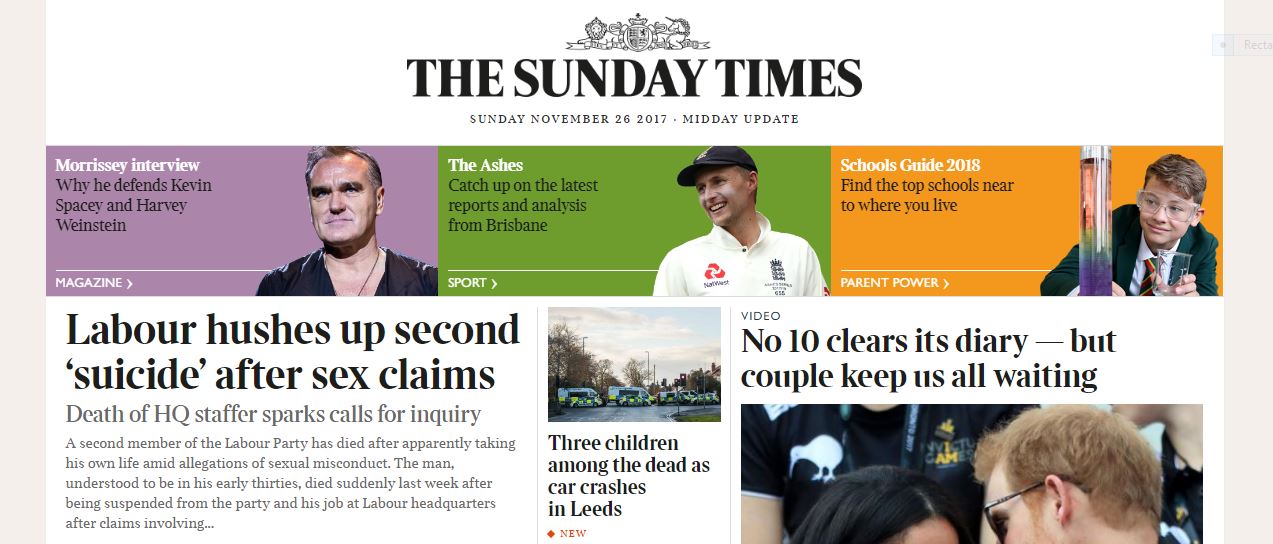 This morning’s London Times greeted us with news of a second political suicide, (literally not metaphorically) in the United Kingdom after a labour party leader’s transgressions with pornography were revealed. Rather than face the tsunami of publicity now surrounding personal and morally repugnant deviance, he chose to end his life.
 trial. Caveat Emptor…the distance traveled from accusation to guilt-by-public-opinion, in cases where other moral issues are at play (like say ideologies or religious beliefs) can become alarmingly short.


 Through the rear view mirror...